


Product Introduction
The technical parameters of ECNITY DC axial fan for ventilation are closely aligned with low-voltage and miniaturized applications, enabling flexible selection for compact systems.
Typical operating voltages include 12V, 24V, and 48V DC, with some special models supporting 6V ultra-low voltage or up to 72V DC. Airflow capacity is relatively modest, ranging from tens to several thousand cubic meters per hour, sufficient for small-device cooling without excessive power output.
Rotational speeds typically range from 1,000 to 6,000 RPM, with basic speed control achieved through voltage adjustment. Power ratings usually fall between 1–50 W, making them ideal for low-energy applications. Protection ratings commonly range from IP20 to IP54, with waterproof models reaching IP65. Products also comply with RoHS, CCC, and other relevant certifications.
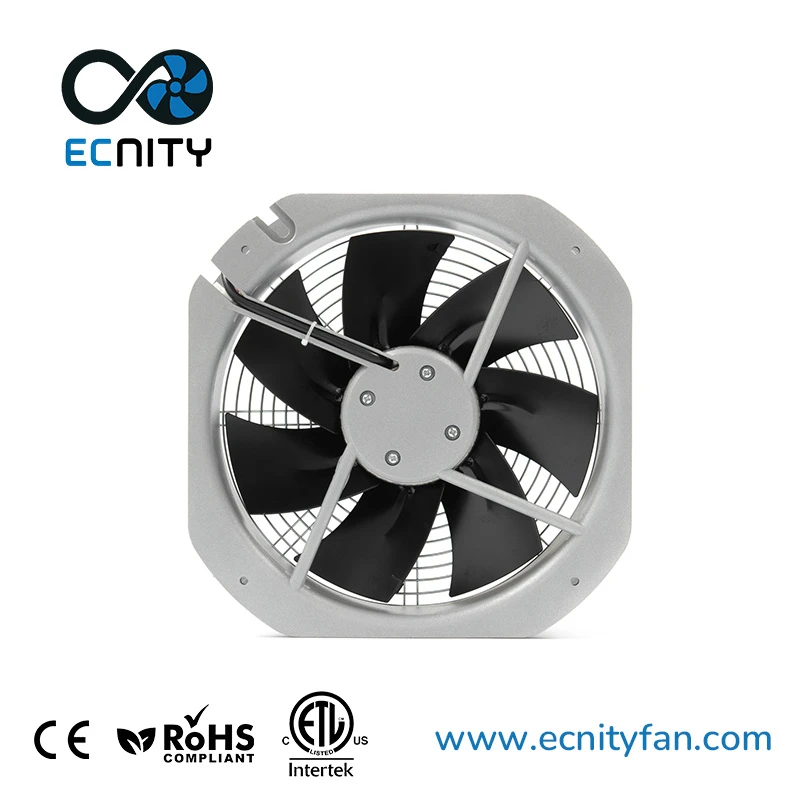
DC axial fan for ventilation technical parameters:
|
Model No. |
Rated |
Operation Voltage |
Rated |
Rated |
Rated |
Air Flow |
Air |
Noise |
|
VDC |
VDC |
A |
W |
RPM |
m3/h |
Pa |
dBA |
|
|
EN-W250-H040-D024-B01 |
24 |
18~32 |
4.40 |
105 |
2750 |
1900 |
220 |
69 |
|
EN-W250-H040-D048-B01 |
48 |
36~57 |
2.20 |
105 |
2750 |
1900 |
220 |
69 |
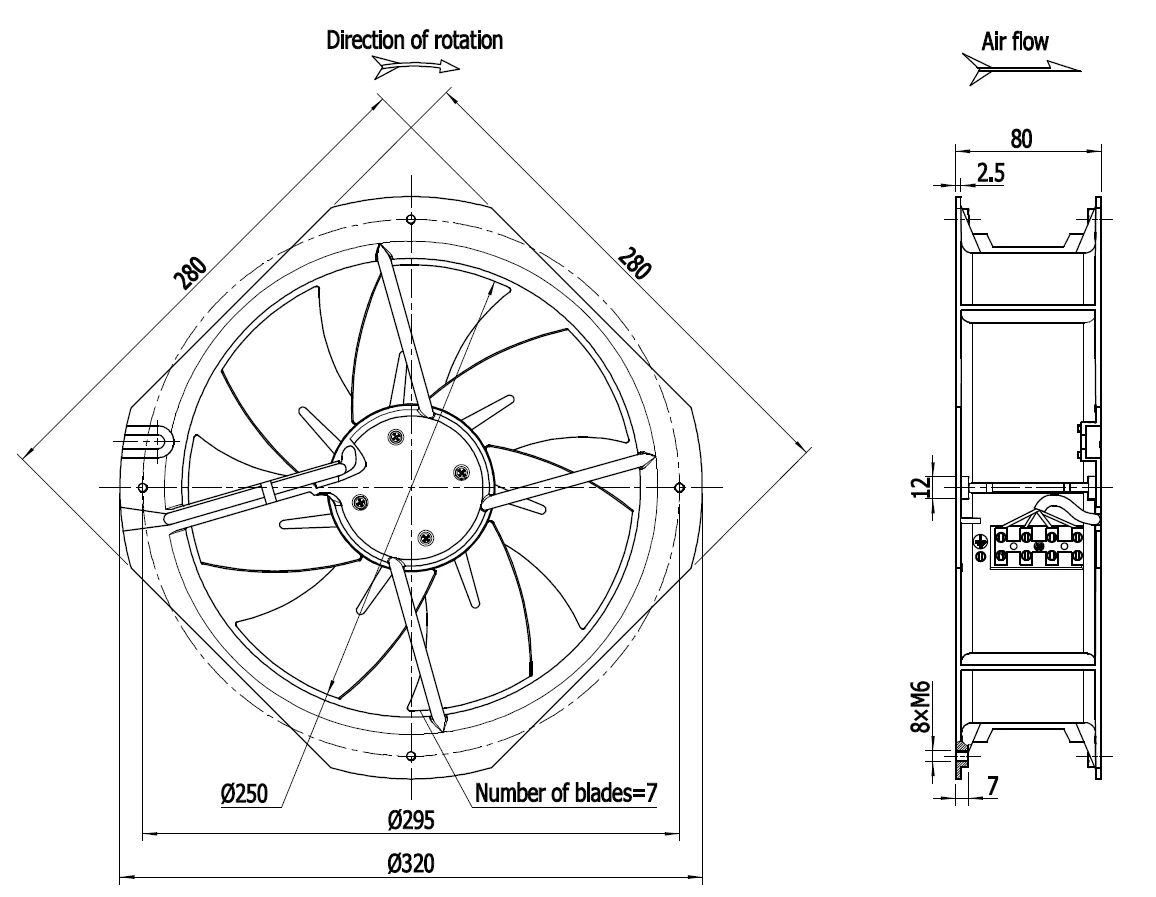
Outline Drawing:
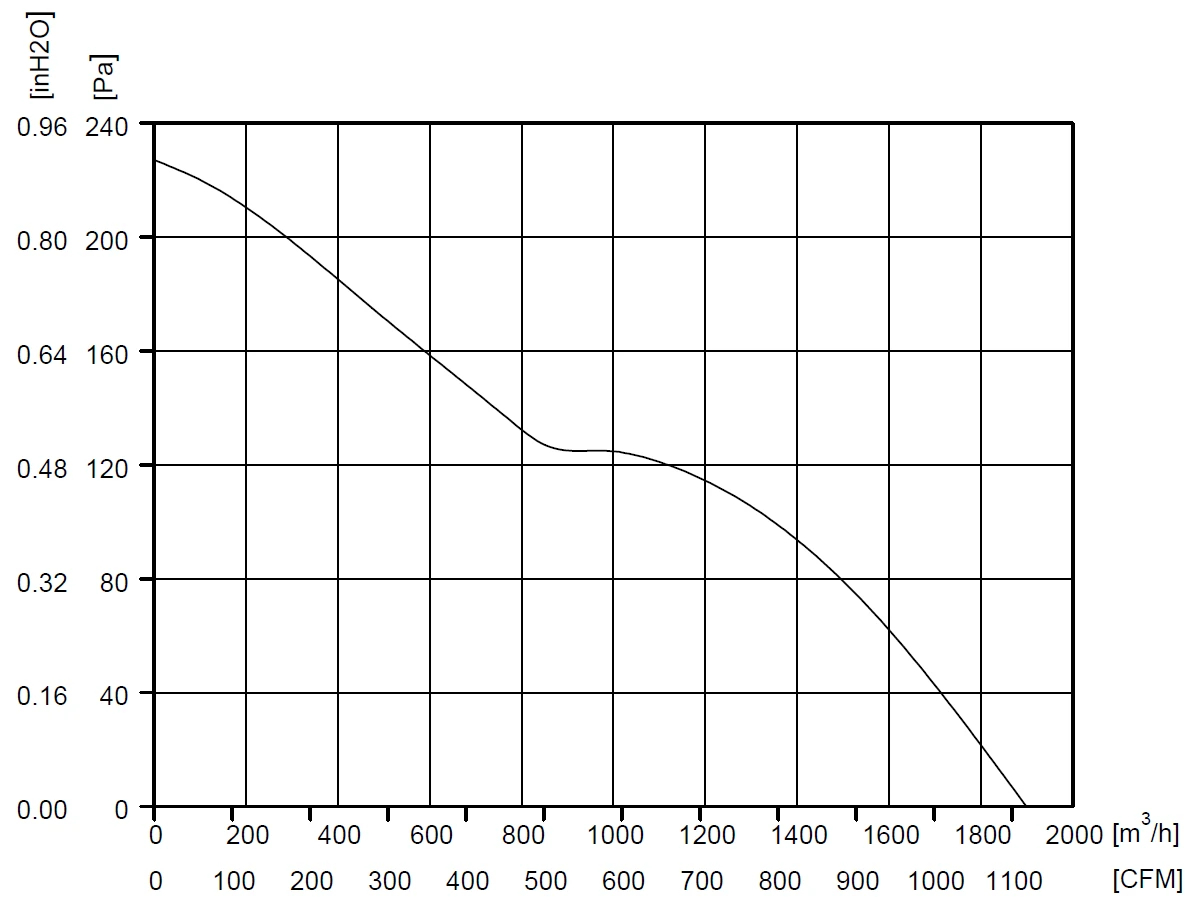
Performance Curve
Connection
|
DC Wire |
|
|
Color |
Function |
|
Red |
024/ 048/ 310VDC |
|
Blue |
GND |
|
Yellow |
0~10VDC/PWM |
|
White |
FG |
Low-voltage compatibility and low power consumption are the core strengths of DC axial fan for ventilation and one of the key distinctions from EC and AC axial fans.
DC axial fans typically operate at 12V, 24V, or 48V DC, allowing direct connection to batteries, solar panels, or vehicle power systems without additional step-down or rectification modules. This reduces system cost and overall size.
Power consumption is extremely low: small models may consume only a few watts, while larger models generally remain below 100W. In portable electronics and automotive ventilation applications, this significantly reduces power draw, extends battery life, and ensures reliable start-up due to low inrush current-far superior to high-voltage fans of comparable size.

Our factory


FAQ
1. How does EC technology align with future regulatory trends?
EC technology aligns well with trends toward higher efficiency standards. Demand-controlled operation supports regulatory direction. Reduced energy consumption supports future compliance. EC fans are considered a future-proof solution.
2. Are EC fans suitable for cross-border engineering projects?
EC fans are commonly used in cross-border engineering projects. Flexible configuration supports different regional requirements. Proper coordination ensures compliance. They are suitable for international system integration.
3. What should international buyers confirm before importing EC fans?
Buyers should confirm voltage, certifications, and documentation requirements. Packaging and logistics details should also be reviewed. Early confirmation avoids delays. This ensures smooth import and project execution.