


Product Introduction
The overall structure of ECNITY EC axial flow fan with fan guard grille consists of precisely matched core components and auxiliary components, working together to ensure stable and efficient operation.
Core components include the EC motor, high-efficiency axial impeller, and integrated electronic controller. The EC motor adopts a permanent magnet synchronous design, featuring low stator copper and iron losses and zero rotor excitation loss. The impeller typically uses airfoil-shaped blades, dynamically balanced on both sides, and is made of corrosion-resistant die-cast aluminum to reduce airflow turbulence and vibration.
Auxiliary components include a double-flanged housing, inlet air guide ring, and terminal box. The housing is made of robust hot-dip galvanized steel, while the integrated inlet guide ring reduces air gaps and lowers noise. The terminal box is externally accessible for easy wiring and is physically isolated from electronic components to enhance operational safety.
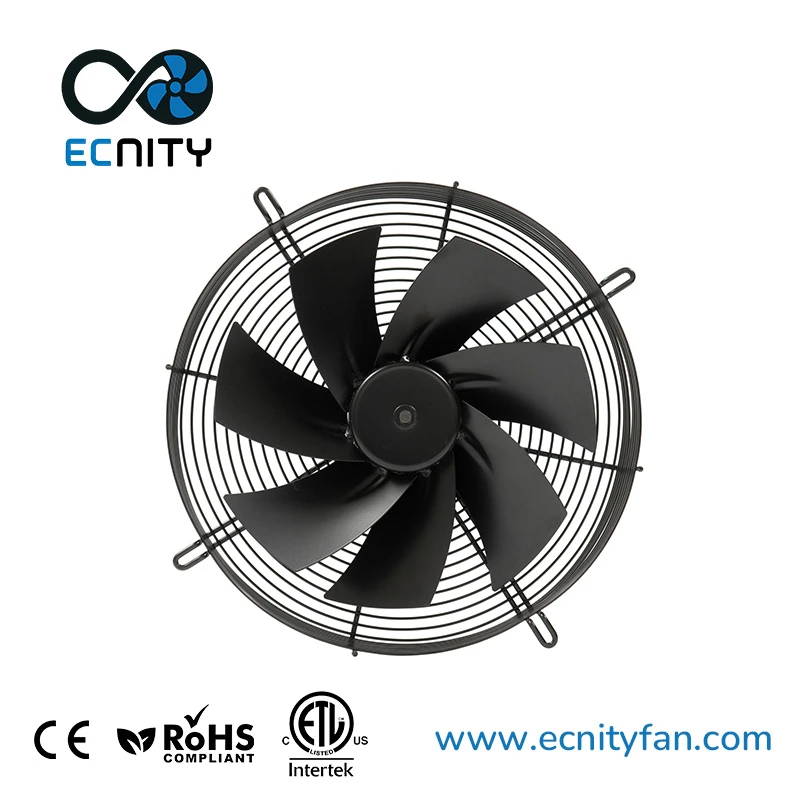
EC Axial fan with wall ring technical parameters:
|
Model No. |
Rated |
Operation Voltage |
Frequency |
Rated |
Rated Power |
Rated |
Air Flow |
Air |
Noise |
|
VAC |
VAC |
Hz |
A |
W |
RPM |
m3/h |
Pa |
dBA |
|
|
EN-G200-H035-E115-A01 |
115 |
90~135 |
50/60 |
1.20 |
68 |
3200 |
1280 |
285 |
64 |
|
EN-G200-H035-E230-A01 |
230 |
184~274 |
50/60 |
0.60 |
68 |
3200 |
1280 |
285 |
64 |
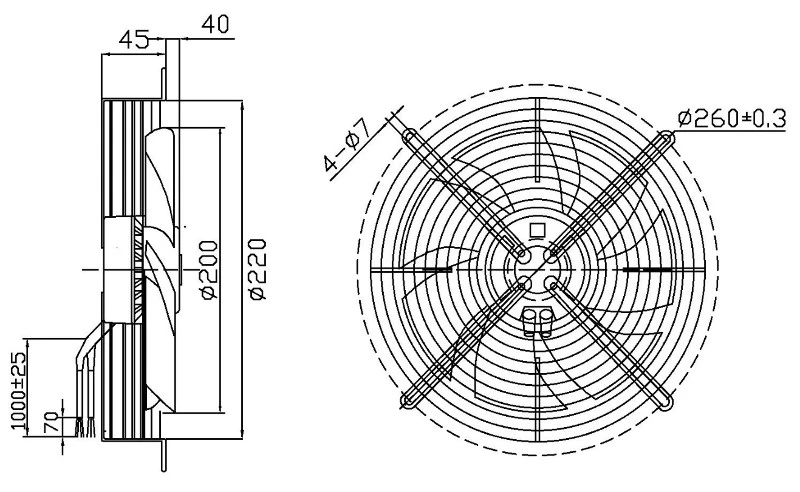
Outline Drawing:
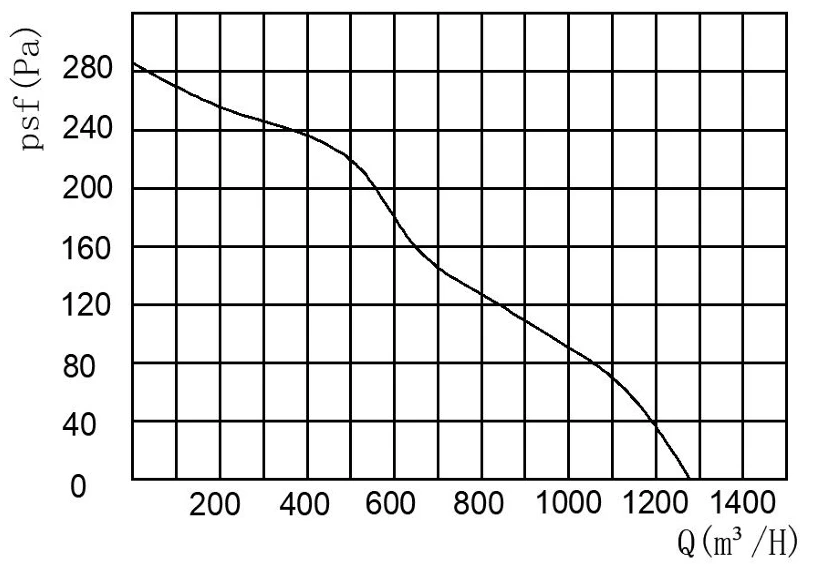
Performance Curve
Connection
|
DC Wire |
AC Wire |
||
|
Color |
Function |
Color |
Function |
|
Red |
+10VDC |
Brown |
L |
|
Blue |
GND |
Blue |
N |
|
Yellow |
0~10VDC/PWM |
Green/Yellow |
PE |
|
White |
FG |
||
The EC motor is the key component enabling high efficiency and intelligent control. Compared with traditional motors, it offers significant advantages.
The permanent magnet synchronous design eliminates excitation losses, while optimized stator winding configurations reduce leakage flux and heat generation. The rotor uses permanent magnets and requires no electrical energy to establish a magnetic field, resulting in lower energy consumption.
The EC motor integrates the electronic drive module, eliminating the need for an external frequency inverter. This compact design allows direct integration with the impeller, reducing overall fan size. Optimized for partial-load operation down to 1:10, EC motors maintain high efficiency, operate at lower temperatures, and offer high insulation ratings for stable operation across varying ambient temperatures.
The ECNITY EC axial fans with fan guard grille offer a wide range of technical specifications to suit diverse applications, including airflow, static pressure, speed, power, and voltage.
Airflow ranges from several hundred cubic meters per hour for small equipment cooling to tens of thousands of cubic meters per hour for industrial ventilation, with some models reaching up to 84,300 m³/h. Pressure ranges include low and medium pressure options. Rated speeds can reach 3600 RPM with stepless control. Power ratings range from tens to hundreds of watts, while voltage options such as 230 VAC support global electrical standards. Products comply with certifications such as CCC and CE, ensuring quality and safety.

Our factory


FAQ
1. What after-sales support is typically available for EC fans?
After-sales support may include technical assistance and documentation. Support helps address installation or operation questions. Reliable after-sales service improves long-term satisfaction. Availability depends on supplier policy.
2. Are EC fans suitable for cost-sensitive projects?
EC fans are suitable for cost-sensitive projects when lifecycle cost is considered. Lower energy and maintenance costs offset initial investment. Efficient operation improves return on investment. This makes EC fans attractive for long-term use.
3. How does this EC fan improve system competitiveness?
High efficiency and controllability improve system performance. Reduced operating costs enhance competitiveness. Reliable operation supports long-term project success. These factors add value to the overall system.