


Product Introduction
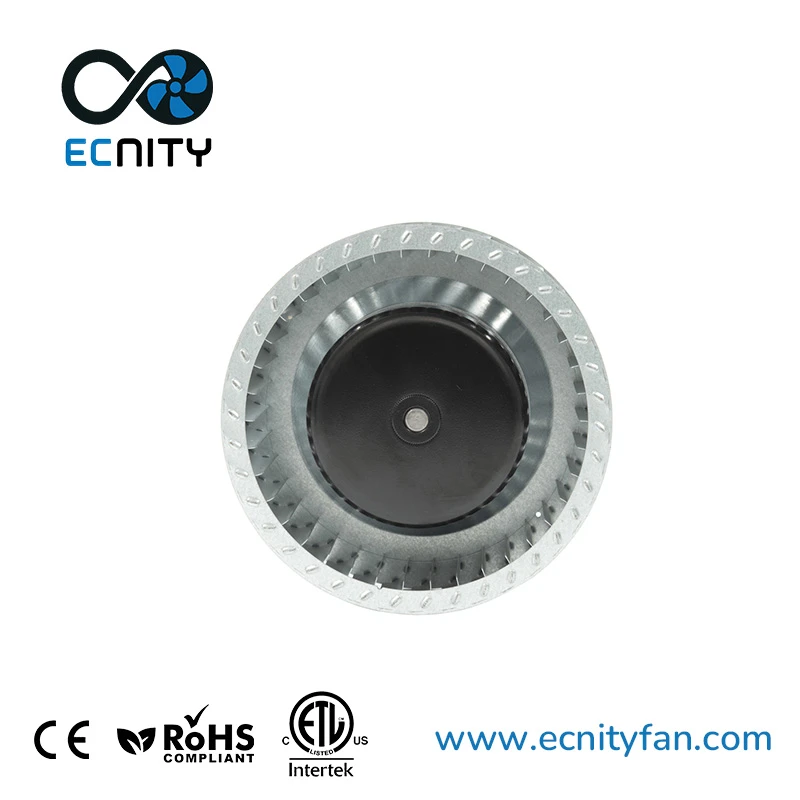
The ECNITY DC centrifugal blower single inlet are primarily used in small-scale, low-requirement applications.
- Electronics: Cooling for computers, servers, and communication equipment
- Residential: Small household appliances, portable ventilation devices
- Light industrial: Small workshops, storage rooms, and compact machinery cooling
- Others: Agricultural ventilation equipment and small medical devices
Their low cost and compact design make them suitable for basic ventilation needs.
DC centrifugal blower single inlet technical parameters:
|
Model No. |
Rated |
Operation Voltage |
Rated |
Rated |
Rated |
Air Flow |
Air |
Noise |
|
VDC |
VDC |
A |
W |
RPM |
m3/h |
Pa |
dBA |
|
|
EN-F160-H062-D024-B01 |
24 |
18~32 |
5.00 |
120 |
2250 |
735 |
600 |
71 |
|
EN-S160-H062-D024-B01 |
||||||||
|
EN-F160-H062-D048-B01 |
48 |
36~57 |
2.50 |
120 |
2250 |
735 |
600 |
71 |
|
EN-S160-H062-D048-B01 |
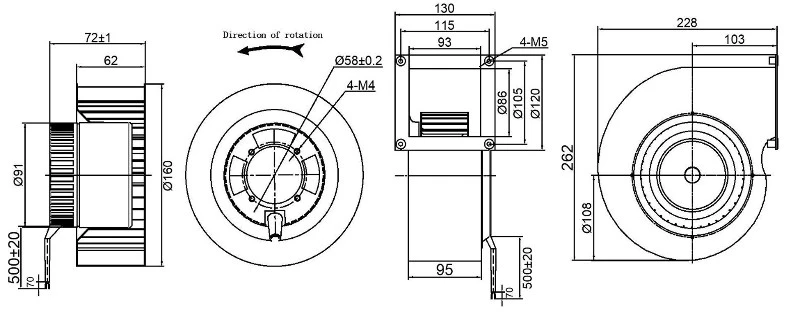
Outline Drawing:
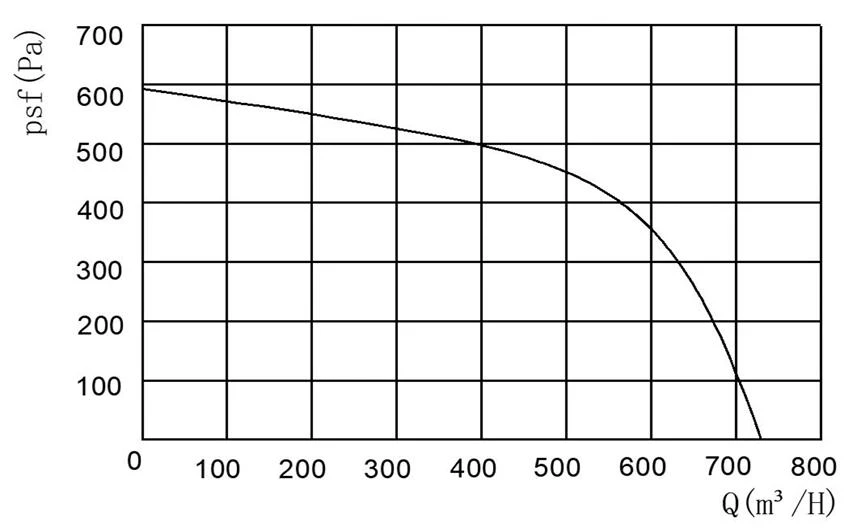
Performance Curve
Connection
|
DC Wire |
|
|
Color |
Function |
|
Red |
024 / 048VDC |
|
Blue |
GND |
|
Yellow |
0~10VDC/PWM |
|
White |
FG |
Energy consumption of DC centrifugal blower single inlet is highly influenced by speed and load. At rated speed and full load, energy consumption is slightly higher than EC models, while under low-speed and low-load conditions, performance is relatively balanced. Powered directly by DC supply, they avoid additional AC-to-DC conversion losses and still achieve 15–20% energy savings compared with traditional AC fans. However, due to limited control methods, they cannot precisely match load and energy consumption. Under high load, energy usage rises sharply, and motor heat generation increases, often requiring additional cooling measures.
Overall, their energy performance is suitable for intermittent operation or low-load continuous operation, balancing energy efficiency and economic viability.

Our factory


FAQ
1. Do forward curved fans support soft start?
EC motor versions typically feature soft start, reducing mechanical stress and extending component life.
2. Are forward curved fans compatible with DC power supply?
DC-powered versions are available and suitable for specific applications such as equipment with DC systems.
3. What certifications are common for forward curved fans?
Common certifications include CE, RoHS, and sometimes UL, depending on market requirements.
4. Can forward curved fans handle humid air?
They can handle moderate humidity levels. Corrosion-resistant materials are recommended for high-humidity environments.