


Hey there! As a supplier of EC Ventilation Axial Fans, I'm super excited to chat with you about the air - flow quality of these amazing fans.
Let's start by understanding what an EC Ventilation Axial Fan is. An EC Ventilation Axial Fan is a type of fan that uses electronically commutated (EC) motors. These motors are known for their high efficiency, low energy consumption, and precise control. The axial design means that the air moves parallel to the axis of the fan, which is different from centrifugal fans where the air moves radially.
So, what exactly determines the air - flow quality of an EC Ventilation Axial Fan?
1. Blade Design
The blades of an axial fan play a crucial role in determining the air - flow quality. The shape, size, and pitch of the blades all affect how the fan moves air. For example, a well - designed blade can create a smooth and consistent air flow. A blade with the right pitch can move a large volume of air with minimal resistance. Some fans have adjustable blades, which allows for customization of the air - flow according to different needs.
When the blades are designed to be aerodynamic, they can reduce turbulence. Turbulence is basically the chaotic movement of air, which can cause noise and reduce the efficiency of the fan. A fan with low turbulence can provide a more stable and uniform air flow, which is great for applications where a consistent air supply is required.
2. Motor Efficiency
The EC motor in an EC Ventilation Axial Fan is a game - changer. These motors are highly efficient compared to traditional AC motors. They can convert a higher percentage of electrical energy into mechanical energy, which means they can move more air with less power. This not only saves energy but also reduces operating costs.
Moreover, EC motors offer better control over the fan speed. You can adjust the speed of the fan according to the specific requirements of the environment. For instance, in a small room, you might want a lower fan speed to maintain a comfortable air flow without creating too much noise. In a large industrial space, a higher speed might be needed to ensure proper ventilation.
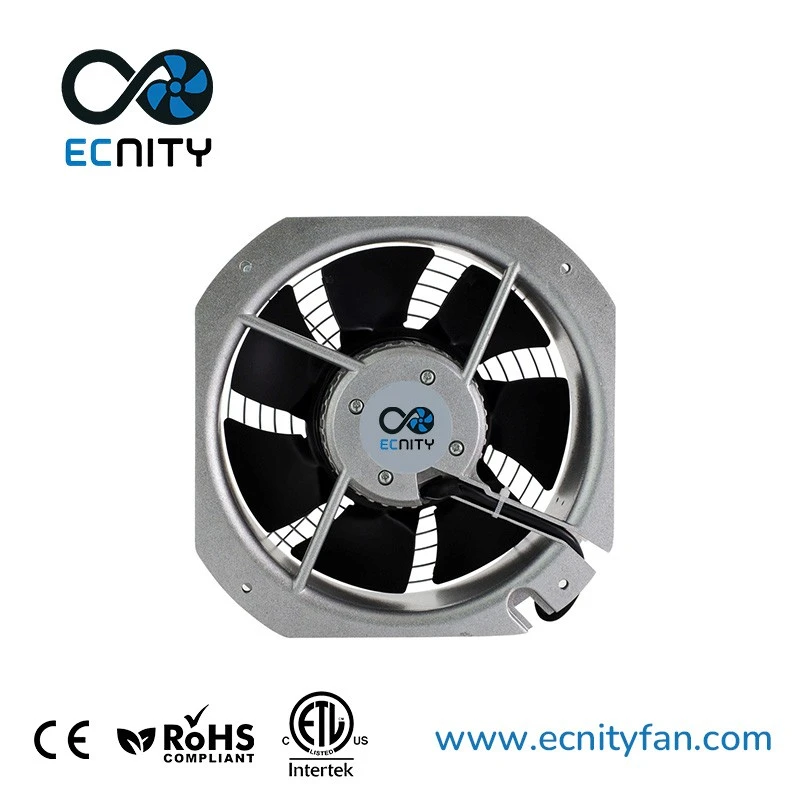

3. Fan Size and Capacity
The size of the fan also has a significant impact on the air - flow quality. Larger fans generally have a higher air - flow capacity. They can move a greater volume of air per unit of time. However, the size of the fan needs to be appropriate for the space it is installed in. If a fan is too large for a small room, it can create excessive air movement and noise. On the other hand, if it's too small for a large area, it won't be able to provide adequate ventilation.
Capacity is not just about the size of the fan but also about its ability to move air against resistance. In some applications, the fan needs to push air through ducts or filters. A fan with a high static pressure rating can overcome this resistance and still maintain a good air - flow.
4. Air - Flow Direction and Distribution
The direction of the air flow is another important aspect of air - flow quality. Some EC Ventilation Axial Fans are designed to blow air in a specific direction, while others can be adjusted to change the direction. This is useful in different scenarios. For example, in a warehouse, you might want to direct the air towards a specific area to cool equipment or to remove fumes.
The distribution of the air flow is also crucial. A good fan should be able to distribute the air evenly throughout the space. This can be achieved through proper design of the fan housing and the blade arrangement.
Now, let's talk about some specific types of EC Axial Fans that we offer.
The EC Axial Flow Fan with Fan Guard Grille is a great option for safety - conscious applications. The fan guard grille protects the blades from accidental contact, which is especially important in areas where people or objects might come close to the fan. It doesn't compromise the air - flow quality either. The grille is designed in such a way that it allows the air to pass through smoothly while still providing protection.
Another interesting product is the EC Axial Fan with Wall Ring. This fan is designed for wall - mounted applications. The wall ring helps to direct the air flow more effectively and also provides a more secure installation. It can be a great choice for rooms where you want to save floor space and still have good ventilation.
So, why should you choose our EC Ventilation Axial Fans? Well, besides the high - quality air flow, our fans are built to last. We use the best materials and the latest manufacturing techniques to ensure reliability and durability. Our fans are also easy to install and maintain, which can save you time and money in the long run.
If you're in the market for an EC Ventilation Axial Fan, whether it's for a small home project or a large industrial application, we'd love to hear from you. We can help you choose the right fan based on your specific needs and requirements. Just reach out to us and let's start a conversation about how we can provide you with the best air - flow solution.
In conclusion, the air - flow quality of an EC Ventilation Axial Fan is determined by multiple factors, including blade design, motor efficiency, fan size and capacity, and air - flow direction and distribution. By understanding these factors, you can make an informed decision when choosing a fan for your ventilation needs.
References
- Fan Engineering Handbook
- Technical documents on EC motor technology
- Industry research on ventilation systems